Survivors & Residence: assignment, upgrades and development plan
The Residence has a single level — all progression runs through survivors. Who to assign, who to upgrade, where tickets come from, and the from-scratch development plan.
☰ On this page 13 ▾
🗓 Updated: 2026-10-12
Survivors are easy to underestimate: a building with people, colored frames and red dots that reads as “I’ll figure it out later”. But survivors directly boost Sanctuary buildings — one speeds up research, another heals soldiers faster, a third raises timber output, a fourth expands the Barracks — and the system runs permanently, so correct assignment and upgrades compound into a serious account bonus.

What the Residence actually does
The Residence is unusual: it is never leveled after the Sanctuary. It has a single level — build it once and construction is done. All further progression runs through survivors.
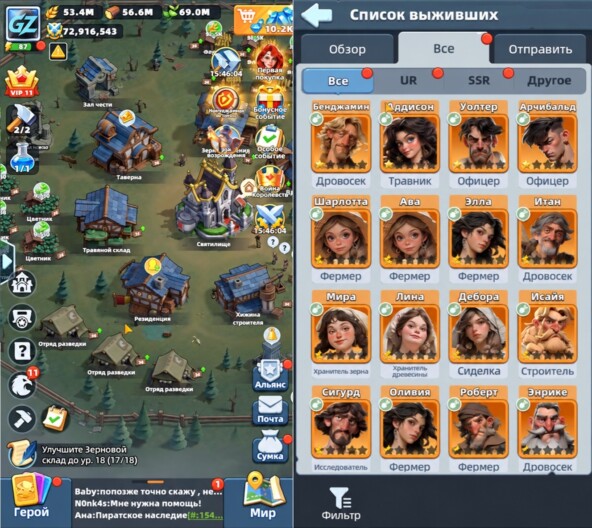
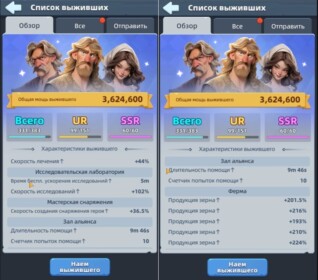
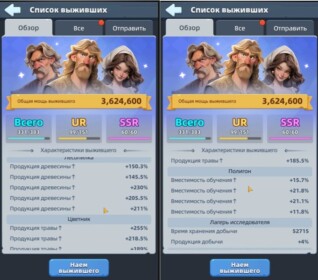
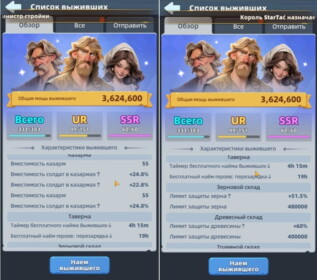
Inside are three tabs: Overview, All and Send. Overview shows collection stats and, more usefully, the bonuses survivors currently give each building. A developed account holds all 60 purple survivors and 99 of 151 gold ones — this is not a five-character side system, the roster grows large over time.
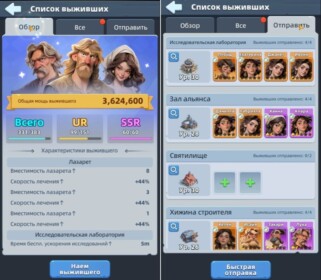
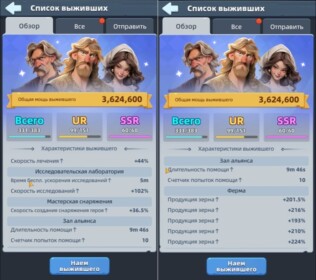
What survivors give buildings
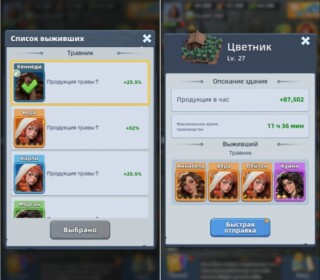
A survivor is not a pretty card — they have a concrete specialty, and when they occupy the matching slot the building gains an extra effect. Even identical buildings can show different percentages simply because different survivors of different rarity and upgrades work on them — that is why two visually identical buildings sometimes perform slightly differently.
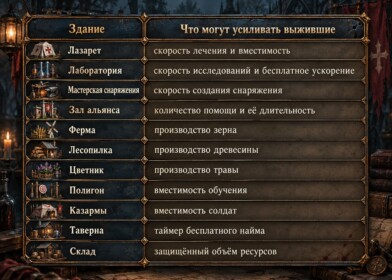
Knowing when to replace a survivor
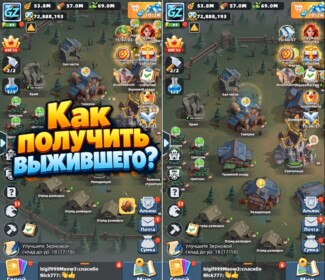
When a survivor icon appears over a building, the worker lineup there can be improved — open the building and swap manually. Example: a green survivor works the lumber mill while a free purple sits in the collection. Swap them, the bonus improves, the icon disappears.
The Residence itself hints with red dots, but with a catch: a red dot means “something can be done here”, not “spend resources urgently”. Those are very different things.
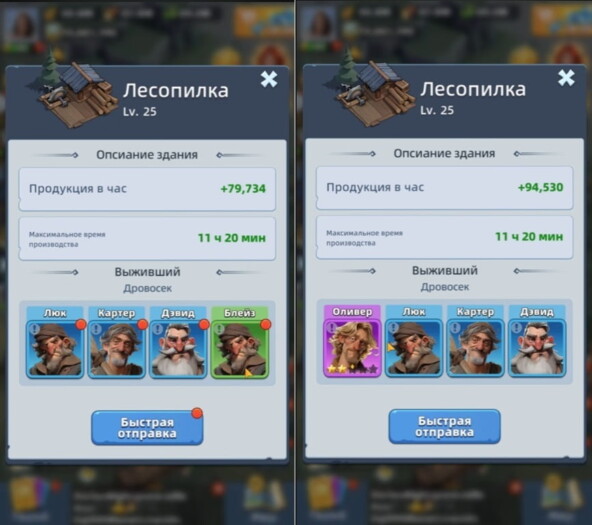
Quick Dispatch — the button to remember
Manual swapping is fine while buildings are few. Later, icons burn over half the map — farms, mills, grounds, storages, barracks — and walking each building is unnecessary. Go Residence → Send → Quick Dispatch: the game automatically refreshes assigned survivors (press a few times if many changes queue up). Weak workers get replaced by stronger ones, overall Sanctuary might grows, and warnings fade. Build the habit: new survivor batch → upgrade the ones that matter → Quick Dispatch. It takes half a minute and the bonuses run permanently. If the game says no survivors are available, the current candidates are already distributed.
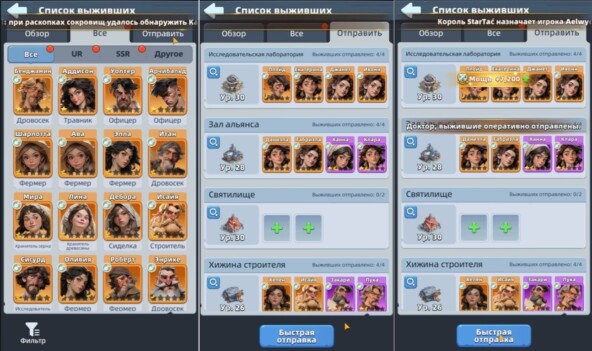
Free survivors: Sanctuary queue and notice board
The simplest source is easy to miss: people with question marks periodically walk around the Sanctuary. Tap them — sometimes a small resource gift, sometimes a new survivor. Free buttons are worth pressing.
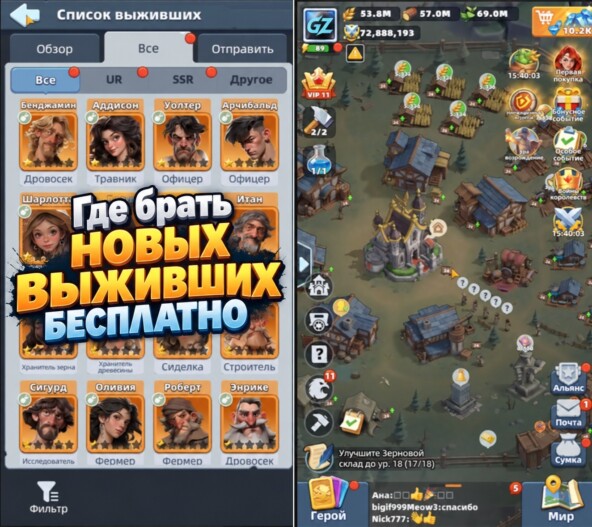
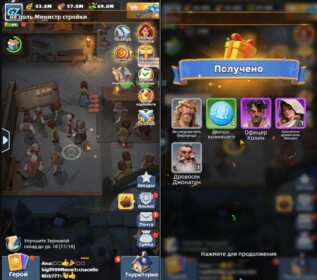
The second source sits in the Sanctuary itself: a notice board near the reception accumulates visitors (up to 20 stored; six in the example). Claiming gives a mix — weak gray characters, two purple survivors, a token — and even unneeded survivors convert into useful upgrade materials.
Who to upgrade — and who to leave alone
This is the most important part. When a yellow arrow appears over the Residence, red dots sit everywhere and everything begs for an upgrade. Don’t.
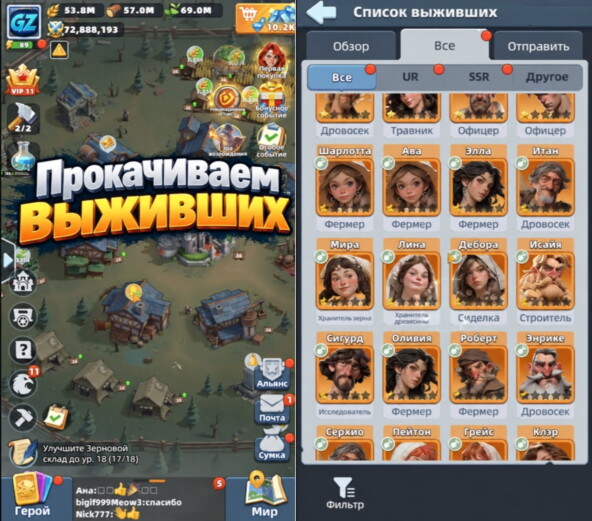
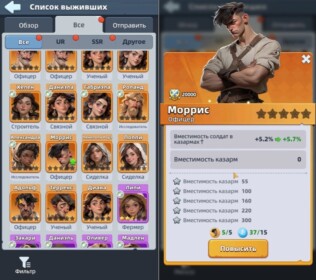
First check the small shovel icon on the card: it marks survivors currently assigned to a building. No shovel means the character just lies in the collection. Example: the game offers Maris (Barracks capacity), but the Barracks already run good gold survivors — Maris isn’t working, so spending rare universal tokens on him only clears a red dot. An expensive way to tidy the interface.
The rule: assigned gold survivors first, then assigned purples, everything else only when resources allow. Assigned is the key word — a well-built working purple beats an idle gold right now.
Two upgrade materials — tokens are the bottleneck
Upgrading raises the survivor’s star track and needs two things: personal fragments of that survivor and universal survivor tokens. Personal parts usually suffice while universal tokens run out and stall everything — so spending them on an idle character over a red dot hurts double. Tokens come from game rewards and the Alliance Shop: if they appear there, they are a strong buy for active survivor progression.
Tavern — targeted survivor hiring
The Tavern has a separate hire tab: first tab heroes, second tab survivors. Tickets yield characters of various rarities plus development materials, and the “Details” button shows the actual drop rates — trust it, not rumors about lucky days.
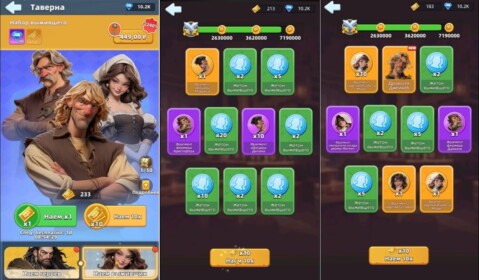
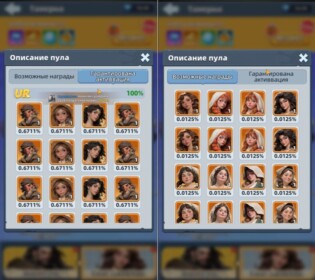
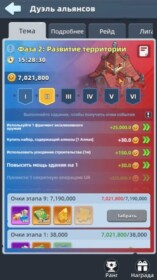
Save hire tickets for Tuesday: the Alliance Duel territory-development stage pays 1,500 base points per survivor hire. A ticket spent any day gives just the character; held until Tuesday it gives the same character plus duel rewards. So don’t spin the Tavern the moment three tickets land — stockpile, wait for the right day, open in bulk.
Verifying upgrades actually work
After hiring, return with enough tokens. Example: a gold survivor already working in the Infirmary. Raise the next star segment and might grows together with real building stats — healing speed and Infirmary capacity. That is the whole point of the system: not the gold frame, not the red dots, not a hundred-face collection, but permanent bonuses. Another good example is a mill worker: before confirming, the game previews the next step (e.g. +2% timber production), so every tap’s payoff can be judged in advance.
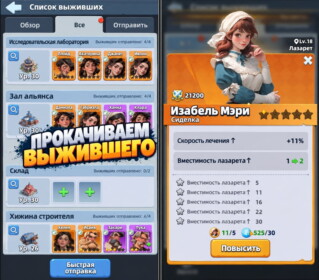
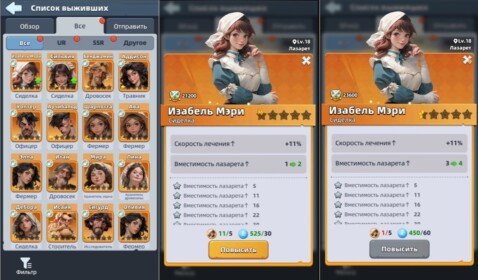
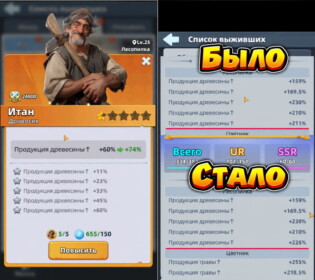
Before spending tokens, always open the card and ask: what improves right now? +2% timber that’s constantly needed? Research speed? Healing? Troop capacity? Or a building barely used? Same resource, very different value.
Re-dispatch after every upgrade round
Easy to forget: after upgrading, open the Send tab and press Quick Dispatch again so distribution accounts for the new strengths. Sanctuary might and building bonuses visibly grow.
Where survivor summon tickets come from
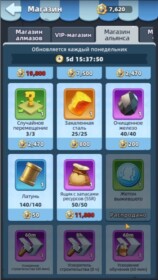
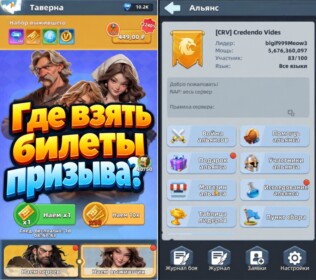
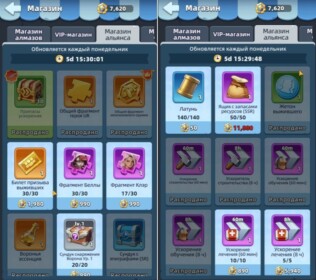
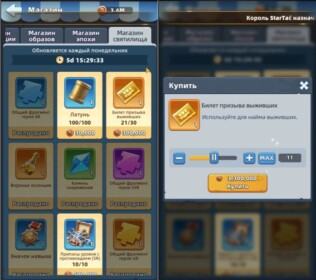
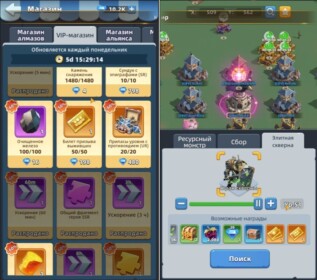
Don’t buy on sight — tickets live in several places. The Alliance Shop stocks them, but universal survivor tokens deserve the currency first since they’re needed constantly. Check the Sanctuary shop regularly too. The VIP shop lists them for crystals, but the diamond price is often bad — don’t spend precious diamonds just because a ticket sits in the window. More tickets arrive from events and Blight activities, so sweep free sources before buying: half the needed tickets often sit unclaimed in rewards.
Developing the Residence from scratch
On a fresh account, don’t try to max every survivor. Collect free Sanctuary people and check the notice board regularly. Hold Tavern tickets for Tuesday when possible. After a big hire round, Quick Dispatch. Then open the list and look only at shovel-marked workers: develop assigned golds first — especially research, healing, scarce-resource production and troop capacity — plus working purples with no gold replacement yet. Leave everyone else waiting; the red dot will survive. This beats spreading tokens across twenty characters and discovering a month later that no useful worker is properly built.

Verdict
The Residence is not the flashiest building — no boss, no army, no city battle. But systems like this make the account stronger every day: right worker, more resources; stronger Lab staff, faster research; better Infirmary, easier army recovery; upgraded Barracks, bigger capacity — all while doing other things. The simple rule: upgrade useful workers, not the collection. Don’t chase every red dot, save hire tickets for Tuesday, guard universal tokens, and Quick Dispatch after every big survivor batch.
Source: Резиденция в Last Asylum: Plague - полный гайд по выжившим. Подробный разбор, план развития by Гейм-Знаток on DTF.
📖 Read next
Did this guide help?